
Generative AI is all the rage these days, promising great advances in AI-led automation and in supporting humans in a variety of ways, from business operations optimisation and improvement to scientific and complex research tasks.
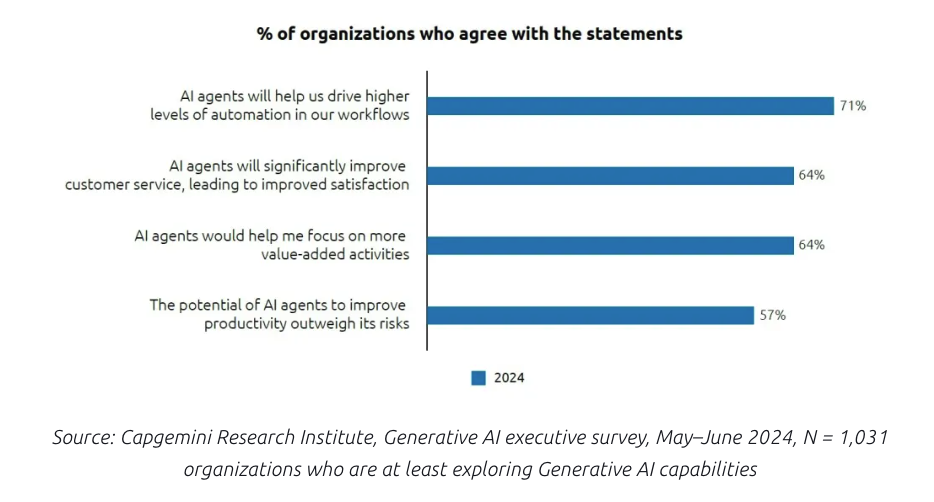
Some of these promises are already being delivered (https://www.capgemini.com/us-en/insights/research-library/generative-ai-in-organizations-2025/), so the excitement is real and well deserved.
However, as with every new technological advance, the underlying technology, tools, frameworks and implementation practices are still immature, although rapidly evolving, driven by innovation and the aforementioned excitement.
What’s more, the ability to develop, test and deploy solutions from scratch quickly and cost effectively through AI-supported code development at scale means we now have a self-sustaining and propagating explosion of new tools and frameworks. These appear almost weekly, covering all aspects of Generative AI technology needs – from Agentic AI development, to RAG and AI-friendly databases, to Memory for Agents and many others.
On the main, these tools and libraries support primarily – or even exclusively – Python or Javascript. Whilst both languages are easy to learn and start coding in, yet powerful and flexible, helping with experimentation and conceptualisation, they are also not inherently safe, secure or fast.
The plethora of tools, frameworks and libraries, coupled with the ease of Python and Javascript AI-assisted coding, has led to the creation of many PoCs and Pilots that work within the limited scope of a PoC or Pilot.
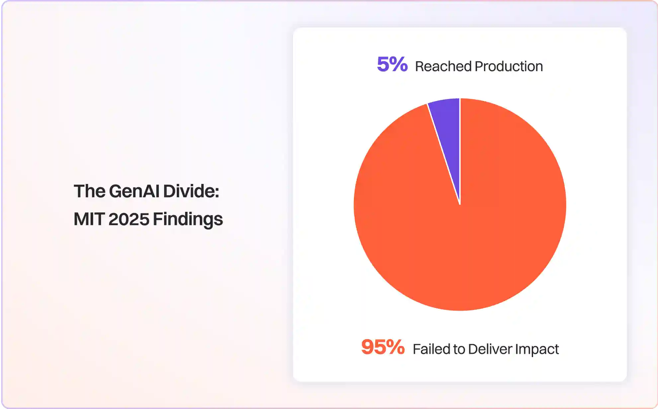
Sadly, most of these PoCs and Pilots fail to reach Production readiness when companies try to put them into ‘real’ action (https://www.artificialintelligence-news.com/wp-content/uploads/2025/08/ai_report_2025.pdf).
The typical issues we see and hear about are:
- Security
- Scalability
- Performance, both in terms of response times and accuracy, as expressed in getting the desired business outcome
- Cost
- Safety, especially when it comes to manipulating corporate data (eg leakage, undesired deletion, etc)
This is not a surprise to us at AI-on-Cloud, given our similar experience with bespoke AI solution development using Python early in the company’s life. Security was an after-thought bolt-on; scalability, costs and related concerns were always difficult to achieve and control. Most of the effort was spent developing agentic solutions that worked, weaving several libraries and frameworks together to achieve agentic flow, agent memory, RAG and more – spending a significant amount of coding-related tokens in the process.
Additionally, as is always the case with bespoke development, the end result was code that had to be maintained in perpetuity and expanded as required through more coding.
We always believed there was a better way to deploy AI-driven automation in the Enterprise world – one that would ‘distil’ mature, product-like deployment practices using a secure, compiled language at its core. We always wanted a platform with security, availability and scalability built in, rather than bolted on. A platform that eased the concerns of maintenance and upgrades.
This led us to the development of TrueX, which offers a ready to deploy platform alternative to our customers, compare to bespoke code development.
TrueX is offered as a platform, deployed in a customer-dedicated single-tenant AWS account, ensuring each customer’s critical data is isolated and secure. The platform is developed using the Rust programming language, which is widely accepted as one of the most secure and fast compiled languages to date.
Architecturally, TrueX is built using AWS:
- serverless components,
- authentication, that readily and natively integrates with our customer’s authentication and RBAC systems.
- monitoring and logging, repurposed to log and monitor the platform’s behaviour all the way from infrastructure to the AI layer in a homogeneous way.
The characteristics and attributes of TrueX enable customers to focus on AI automation and optimisation at the business logic level, rather than worrying about creating the whole solution. They are able to do so without losing the fine-grained ability to control agent behaviour, tools and tool usage through MCP, and agentic interaction with humans in a way that is very specific to their use case. Nothing is lost behind a UI that restricts what they can do, and there is no ‘token-eating’ bloat that can prove very expensive in production.
Our platform enables users to guide Agentic AI with the same fine-grained detail they would have had if they had coded from scratch using libraries and frameworks, but without the coding! It is the equivalent to deploying and configuring an ERP or CRM PaaS / SaaS solution, vs developing one from scratch.
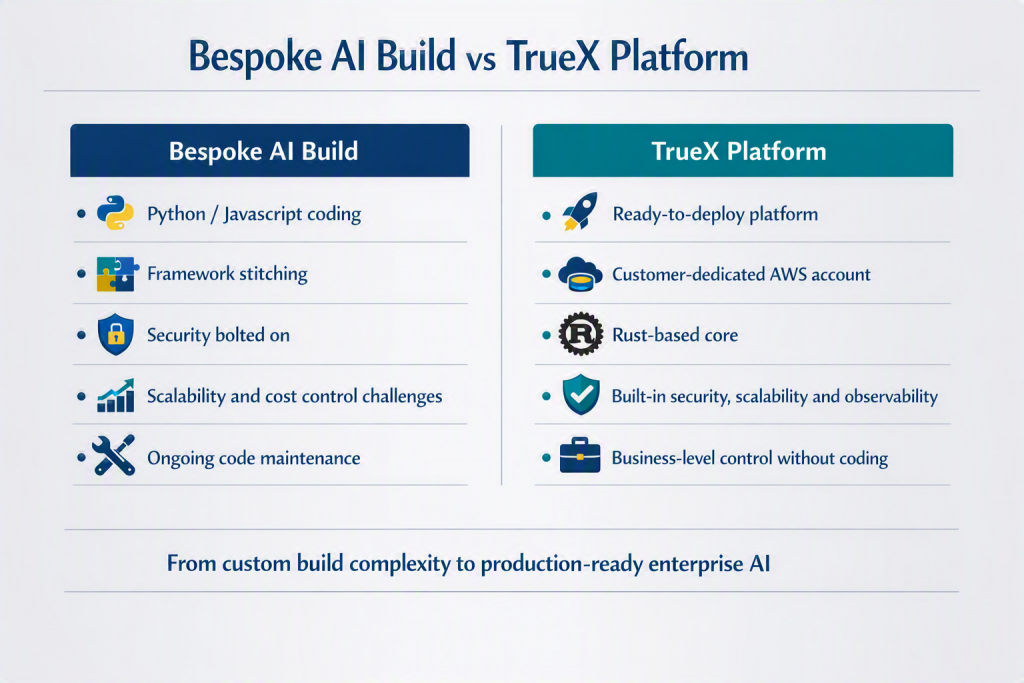
Because security, scalability and observability are built in, the customer-specific Agentic AI automation solution put together on TrueX ticks all the boxes required by a company’s CISO and CTO, which means IT approval to deploy into production is no longer a blocker.
TrueX’s platform approach enables business operations-focused stakeholders to be intimately involved in creating the Agentic AI optimisation of their operations, rather than having something imposed on them by IT; yet it still enables IT to keep control of the security, availability and scalability of the customer-specific deployment.
This holistic approach means the transition from PoC and Pilot to Production is a natural progression and a given, rather than a consideration for a separate project with its own timeline and requirements.